Private real estate investment

Real estate, underwritten one asset at a time.

O’Brien Capital Partners invests across commercial real estate, multifamily and residential, and ground‑up development, syndicating the equity alongside a small group of private investors.

Private offerings under Regulation D. Any investment is made solely through the offering documents.

Investment approach

What we invest in.

O’Brien Capital Partners is a privately held real estate investment and development firm. We invest in and develop commercial, multifamily, and residential property, and syndicate the equity alongside a small group of private investors.

We are not mandated into a single asset class, and we do not treat that as licence to chase whatever is fashionable. Every opportunity is judged against the same criteria, and against what that type of asset is actually supposed to do for an investor.

We primarily seek opportunities with the following attributes:

Product Type
Commercial real estate, multifamily and residential, and ground‑up development.
Transaction Type
Single‑asset syndications in which limited partners co‑invest alongside the sponsor, offered privately under Regulation D.

Criteria describe what we look for. They are not a commitment to acquire any particular asset, and any investment is offered solely through the offering documents.

Our approach

Our edge is what we pass on.

We underwrite to actuals, not the pro forma.

Every assumption in a broker package is someone else’s opinion. We verify the real numbers first: the actual lease and rent roll on an income deal, the actual operating history on a residential one, the actual bids and entitlements on a development. If a deal only works on projected growth, we pass.

Investing across categories is not the same as being unfocused.

Working in more than one asset class widens what we can look at; it does not lower the bar. Each category is judged on its own terms, against what that type of asset is actually supposed to do for an investor. A development deal is never underwritten as though it were a stabilized lease.

We bring few deals because most do not clear.

Saying no far more often than yes is the job. We would rather bring investors one opportunity we have genuinely stress‑tested than a steady pipeline of deals that merely looked acceptable at the time.

The sponsor is reachable. That is deliberate.

Jeff O’Brien takes the first call himself and stays the point of contact through the offering documents. Investors at this size should be able to ask the person who underwrote the deal a direct question and get a direct answer.

How it works

From first call to first distribution.

Four steps. The first one is a conversation, not a commitment.

  1. 01

    Book a call

    A short introductory call with Jeff. He walks through the firm’s thesis, the current offering, and answers your questions. No obligation and nothing to sign.

  2. 02

    Review the offering package

    If the strategy fits, you receive the private offering package: the lease, the underwriting, the business plan, the projected returns, and the full risk disclosures.

  3. 03

    Accreditation verification

    Because this is a Rule 506(c) offering, your accredited status is verified through a third‑party verification service before you receive subscription documents. A self‑certification is not sufficient under the rule.

  4. 04

    Subscribe and receive distributions

    You execute the subscription documents, fund your investment, and receive distributions on the schedule set out in the offering documents, along with your annual K‑1.

Current offering

Open for investment.

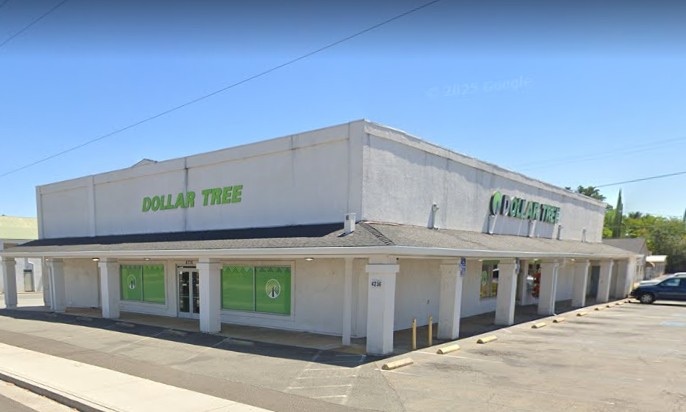
The single-tenant Dollar Tree at 4236 Shasta Dam Blvd., Shasta Lake, California.

Open

Single‑Tenant Dollar Tree

Shasta Lake, California

Category
Commercial real estate
Tenant
Dollar Tree, Inc. (Nasdaq: DLTR)
Asset type
Single‑tenant retail
Structure
Reg D Rule 506(c)
View this offering

Projected returns, target hold period, distribution schedule, and full financials are provided in the private offering package to verified accredited investors.

Common questions.

What does O’Brien Capital Partners actually do?

We invest across three categories: income‑producing commercial real estate, multifamily and residential, and ground‑up development. We syndicate the equity, meaning a small group of private investors co‑invest alongside the sponsor and hold a passive limited partner position while the sponsor handles acquisition, financing, and asset management. Each offering is a separate investment in a specific asset; investors choose the ones they want to participate in rather than buying into a blind pool.

What does “accredited investor” mean?

In summary, an accredited investor is someone who meets one of the SEC’s tests. The common ones are: income above $200,000 individually, or $300,000 together with a spouse or spousal equivalent, in each of the two most recent years, with a reasonable expectation of the same in the current year; or a net worth above $1 million, individually or jointly, excluding the value of a primary residence. Holding a Series 7, 65, or 82 licence in good standing also qualifies, and there are further categories for entities and certain professionals. This is a summary rather than the full rule, and it is not advice about your own status. Exact criteria are confirmed during verification.

Why do I have to verify my accredited status?

Our current offering is made under Rule 506(c) of Regulation D, which permits us to discuss the offering publicly. In exchange, the rule requires the issuer to take reasonable steps to verify that every investor is accredited. A checkbox is not sufficient. Verification is handled through a third‑party service before you receive subscription documents.

Is there a minimum investment?

Minimums are set per offering and are stated in that offering’s documents. The minimum for the current Rule 506(c) offering is $10,000.

What are the risks?

All real estate investments carry risk, including the possible loss of your entire investment. Private placements are illiquid, there is no public market for the interests, and distributions are not guaranteed. Each offering’s documents include a full risk section that you should review with your own legal, tax, and financial advisors.

What happens on the first call?

Jeff walks through how the firm underwrites, the current offering, and whatever you want to ask. It is an introduction, not a pitch meeting, and there is nothing to sign. If it is not a fit, that is a perfectly good outcome.

Speak with the sponsor

Have a direct conversation.

A short introductory call with Jeff O’Brien. Confidential, no obligation, and no commitment of any kind.

Book a call